Copper-peptide / extracellular-matrix research material
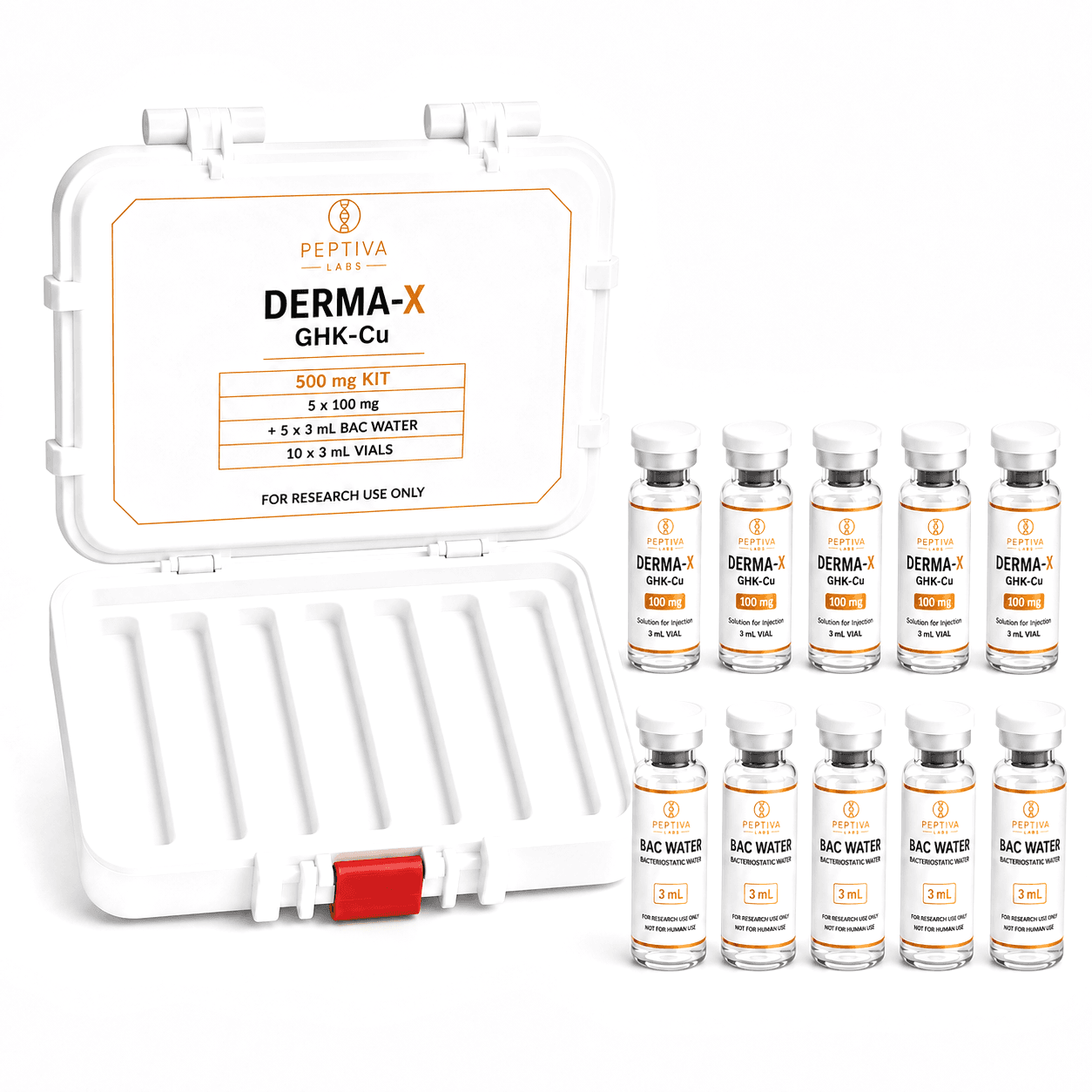
DERMA-X GHK-Cu
GHK-Cu (copper tripeptide / prezatide copper)
Disclaimer
Disclaimer
For research purposes only. Peptiva Labs products are supplied exclusively for scientific laboratory research and analytical purposes. They are not intended for human or animal use, and must not be misused in any way that contravenes applicable laws.
- Research Grade Peptides – batch documentation available where supplied
- Supplied in sterile, flip-top vials designed for laboratory use
- Handled as a research-use laboratory supply only
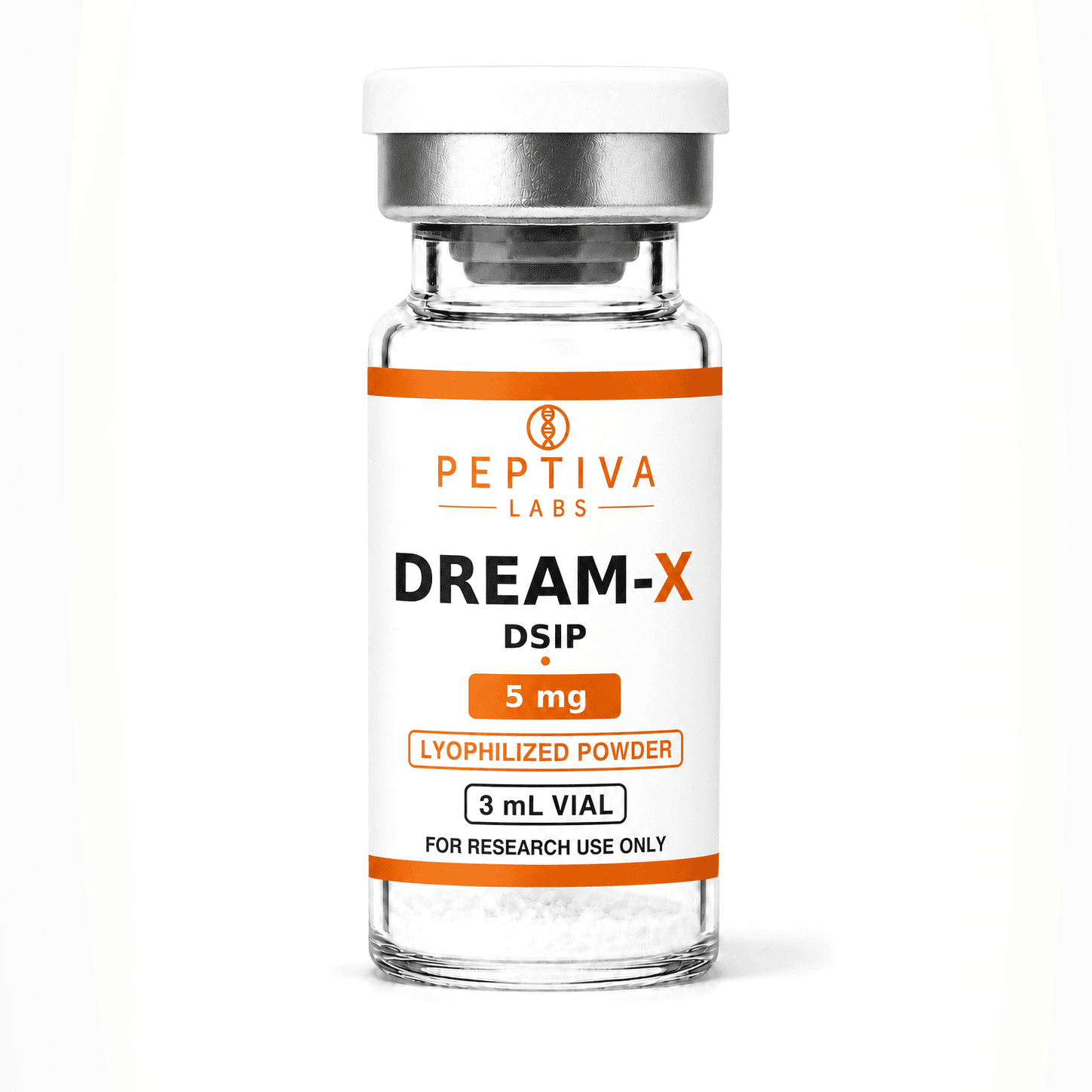
All Peptiva Labs peptides are supplied strictly for research and laboratory use only. Each vial contains sterile, lyophilised powder that has been finely milled and sieved to ensure consistency. The stated weight refers to the content of a single vial. Reconstitution requires bacteriostatic water containing 0.9% benzyl alcohol, or a suitable equivalent. We do not offer any advice or recommendations regarding dosage, administration, or use in humans or animals.
GHK-Cu is a copper(II)-binding tripeptide complex used in laboratory research on fibroblast activity, extracellular-matrix remodeling and inflammatory or oxidative pathways.
You may also like
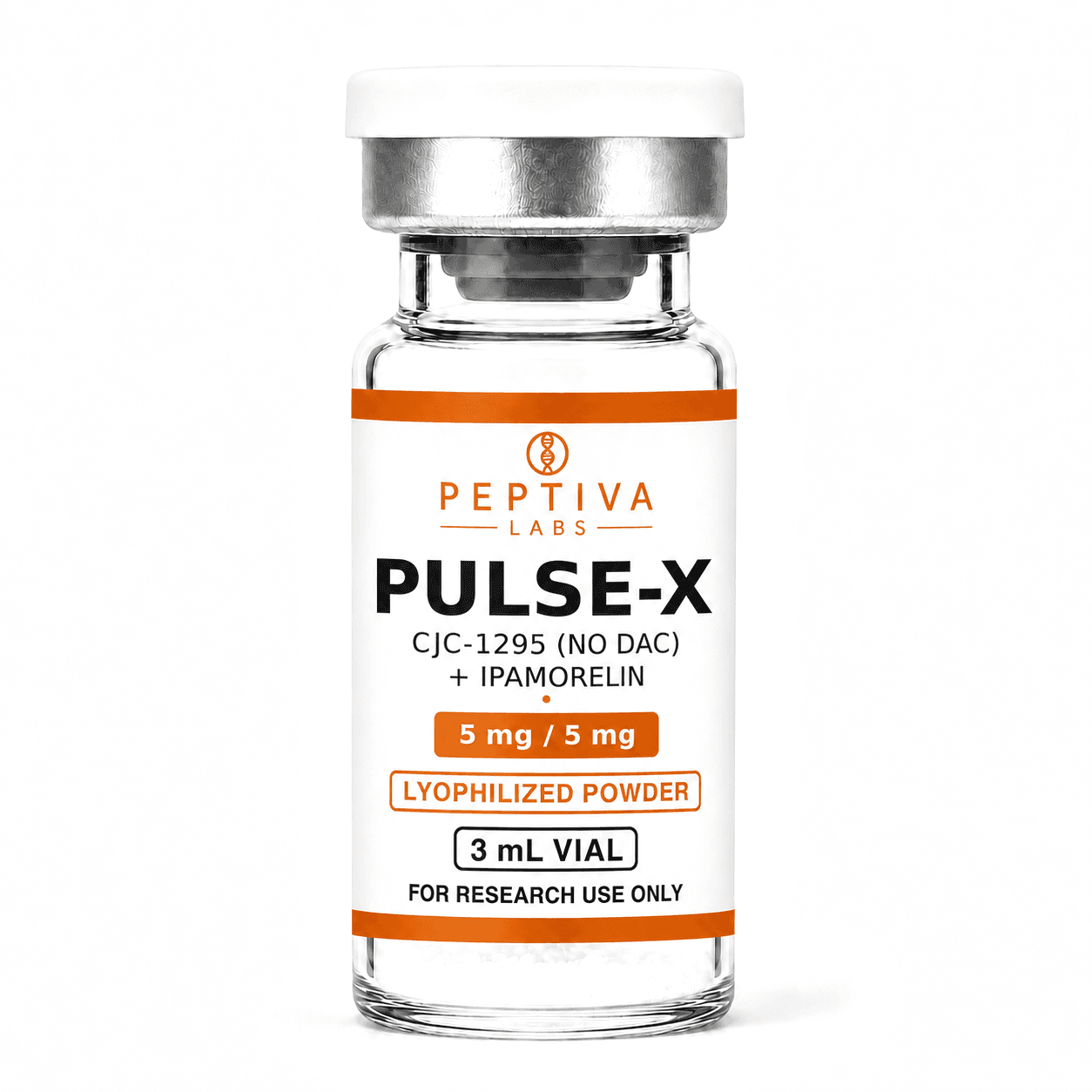
PULSE-X CJC-1295 + Ipamorelin
CJC-1295 (No DAC / Modified GRF 1-29) + Ipamorelin
Regular price$109.00 USD