Skip to product information
1 of 1

Three-component repair-pathway and copper-peptide research blend

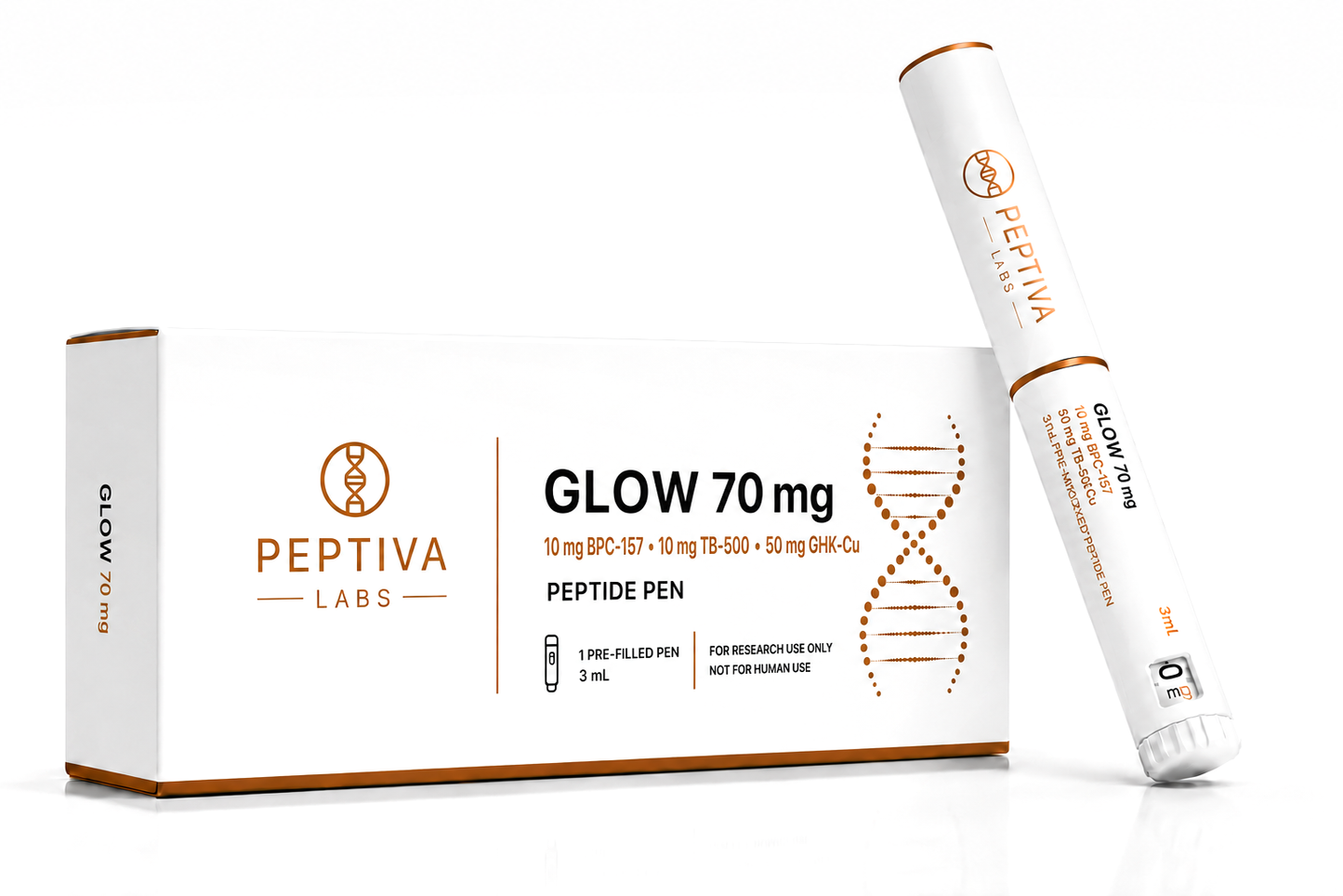
GLOW Research Blend Pen

GLOW Research Blend Pen

BPC-157 + TB-500 + GHK-Cu

Regular price Dhs. 0.00 AED
Regular price Sale price Dhs. 0.00 AED
Sale Sold out
Strength
Quantity

GLOW combines BPC-157, TB-500 and GHK-Cu in a 70 mg, 3 mL pre-filled research pen for laboratory investigation of cell migration, extracellular-matrix remodeling and repair-associated signaling pathways.
Specifications

Active material
BPC-157 10 mg + TB-500 10 mg + GHK-Cu 50 mg
Declared presentation
70 mg total per pen
Container
3 mL nominal cartridge, one pre-filled pre-mixed blend pen
Nominal concentration
23.33 mg/mL total nominal — BPC-157 3.33 mg/mL, TB-500 3.33 mg/mL, GHK-Cu 16.67 mg/mL
CAS number(s)
The blend has no single CAS. BPC-157 parent 137525-51-0; BPC-157 acetate 1628202-19-6. TB-500 identity must be confirmed. The GHK-Cu identifier is form-dependent.
Molecular formula
No single blend formula. BPC-157 C62H98N16O22; TB-500 fragment C38H68N10O14; GHK-Cu neutral complex approximately C14H22CuN6O4.
Molecular weight
No single blend molecular weight. BPC-157 1419.5 g/mol; TB-500 fragment 889.0 g/mol; GHK-Cu form-dependent, approximately 401.9 g/mol for a neutral complex.
Sequence / structure
BPC-157 GEPPPGKPADDAGLV. TB-500 fragment commonly Ac-LKKTETQ-OH; full-length thymosin beta-4 is a different 43-residue molecule. GHK-Cu Gly-His-Lys-Cu(II).
Synonyms
GLOW blend; BPC-157 / TB-500 / GHK-Cu blend

What this material is studied for

  • Comparative single-component versus combination cell-migration studies.
  • Angiogenesis, fibroblast and extracellular-matrix remodeling models.
  • Repair-associated signaling and copper-peptide compatibility research.

Scientific context

GLOW is a three-component research blend. BPC-157 is studied in preclinical cell-migration and angiogenesis models; TB-500 commonly refers to a thymosin beta-4 fragment used in actin and cell-migration research; and GHK-Cu is studied in copper-dependent fibroblast and matrix pathways.

Storage and handling

Store a mixed or in-use research pen refrigerated at 2–8 °C (36–46 °F). Keep unused pens cold until their expiry date, protect them from direct light, and never freeze them.

Disclaimer

For laboratory research use only. Not for human or veterinary use. Not a food, drug, cosmetic or dietary supplement. Not intended to diagnose, treat, cure or prevent any disease. Purchasers are responsible for lawful handling and use by qualified personnel.

View full details